

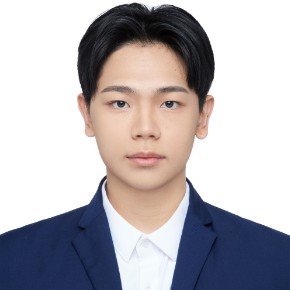
Jin-Xun Zhang
AI Software Engineer
Taipei City
Summary
I am an AI/ML-focused engineer with strong end-to-end experience turning real-world problems into deployable systems. I have built a reproducible deep learning pipeline—from data curation and rigorous experimentation (fair benchmarking, staged fine-tuning, LR scheduling, regularization, and ablation-driven tuning) to on-device inference design and iOS app delivery through TestFlight/App Store workflows. My background as a process engineer strengthened my data-driven problem solving in high-volume manufacturing, where I optimized laser drilling and production processes through structured experiments and cross-functional troubleshooting. With hands-on lab experience across equipment operation (evaporation, spectroscopy, MEMS/EWOD) and system prototyping (PEM fuel cell design, testing, and outreach), I bring a rare blend of software, ML, and hardware mindset—able to debug, iterate, and ship reliable AI products under practical constraints.
Overview
5
5
years of professional experience
2
2
Languages
6
6
years of post-secondary education
Work History
AI-Based Peritonitis Risk Detection in Medical
NTU
09.2024 - 02.2026
I built an end-to-end deep learning pipeline to support rapid infection-risk screening for peritoneal dialysis in a real-world setting. From an ML engineering perspective, I enforced reproducibility and reliable generalization by versioning data/preprocessing, preventing leakage with case/patient-level splits, and using a fixed held-out test set as the deployment proxy.For model optimization, I benchmarked multiple CNN backbones under a consistent training protocol (same input spec, augmentations, optimizer) to ensure fair comparisons. I used staged fine-tuning (freeze → gradual unfreeze), learning-rate scheduling (warm-up / OneCycleLR or cosine decay), regularization (weight decay, dropout), and early stopping to stabilize training and reduce overfitting. Hyperparameter tuning followed a coarse-to-fine approach: LR range tests and small pilot runs to narrow LR/batch size, then systematic ablations on weight decay, augmentation strength, unfreeze depth, and patch/cropping strategy, validated with repeat runs and error analysis (confusion matrix + FP/FN review).For deployment, I engineered an on-device inference pipeline including preprocessing, patch-based inference, and aggregation into a single risk score, with intermediate outputs retained for debugging/monitoring. I integrated the model into an iOS app, managed TestFlight releases, and handled signing, bundle IDs, and versioning to ship a maintainable, production-oriented ML system.
Teacher's Assistant
Department of Bio-Industrial Mechatronics Engineering, NTU
01.2024 - 08.2024
As a teaching assistant in the lab, I supported hands-on training and daily operation for key equipment and processes, including an in-house thermal evaporation system and a spectrometer for optical characterization. I helped new members set up deposition runs (basic chamber preparation, parameter checks, and process logging) and guided measurement workflows to ensure consistent, repeatable spectra. I also assisted with MEMS fabrication tasks and demonstrated EWOD (electrowetting-on-dielectric) device operation, covering standard operating steps, common failure modes, and practical troubleshooting to keep experiments running smoothly and safely.
Process Engineering Intern
景碩科技
02.2023 - 06.2023
I worked as a Process Engineer in the laser drilling area, optimizing machine parameters for PCB panel drilling through structured DOE and data analysis to improve yield, stability, and process consistency. I standardized validated settings into production-ready specifications to reduce lot-to-lot variation and strengthen manufacturing performance. I also supported the solder mask (green paint) department by improving line processes and investigating recurring issues with cross-functional teams (manufacturing, equipment, and quality). I verified solutions on the production line and helped implement scalable improvements for high-volume operations.
- Developed organizational skills through managing multiple tasks simultaneously while adhering to strict deadlines.
- Prepared project presentations and reports to assist senior staff.
- Utilized strong communication abilities during presentations which led to increased understanding among colleagues regarding project goals and objectives.
Fuel Cell Project
Yuan Ze University
01.2021 - 01.2022
I designed, assembled, and tested a proton-exchange-membrane (PEM) fuel cell system, covering both core stack integration and supporting subsystems such as cooling, heat exchange, and hydrogen storage tank design. Through iterative prototyping and performance testing, I gained hands-on experience in system-level renewable energy engineering, from component selection and mechanical integration to safety and reliability considerations. I also served as a lecturer for outreach programs, delivering fuel cell and clean-energy workshops and demonstrations at dozens of junior and senior high schools, translating complex engineering concepts into clear, practical learning experiences.
Education
Bachelor of Mechanical Engineering -
Yuan Ze University
Zhongli District 09.2019 - 06.2023
Master of Science - Department of Bio-Industrial Mechatronics Engineering, NTU
National Taiwan University
Taipei, Taiwan 09.2023 - 02.2026
Skills
Programming Languages: Python, Java, Swift, Solidity
Software & Tools: SolidWorks, AutoCAD, COMSOL, OpenCV, MATLAB, scikit-learn, Core Data
Machine Learning & Data Analysis: CNN model training, time series prediction, data preprocessing
Blockchain & DeFi: Solidity smart contract development, blockchain fundamentals, decentralized finance protocols
Professional subjects: Engineering Mathematics, Automatic Control, Dynamics
Timeline
AI-Based Peritonitis Risk Detection in Medical
NTU
09.2024 - 02.2026
Teacher's Assistant
Department of Bio-Industrial Mechatronics Engineering, NTU
01.2024 - 08.2024
Master of Science - Department of Bio-Industrial Mechatronics Engineering, NTU
National Taiwan University
09.2023 - 02.2026
Process Engineering Intern
景碩科技
02.2023 - 06.2023
Fuel Cell Project
Yuan Ze University
01.2021 - 01.2022
Bachelor of Mechanical Engineering -
Yuan Ze University
09.2019 - 06.2023